Will Your IR Lamps Start Talking to You?
Let’s be honest about how most powder coating lines work right now. You’ve got these “dumb” infrared lamps. You crank up the power, the tubes get hot, and then you basically just pray that the parts hit the right cure temperature. It’s a gamble. If a lamp burns out or the voltage dips, you usually don’t even notice until the parts roll off the line and you realize the powder is under-cured. Now you’ve got a mess on your hands. But things are changing. We’re moving toward a world where the lamps actually tell you what’s going on.
Stop Guessing, Start Knowing
Imagine putting sensors right into the lamp housing or the controller. Instead of squinting at a gauge and guessing the heat flux, you just see the actual wattage and surface temp on a screen. It takes the guesswork out of the day. When a tube starts to wear out, it won’t just flicker and die at the worst possible moment. Instead, it’ll send a ping to your PLC saying, “Hey, my output just dropped by 10%.” That means you can swap it out during a scheduled break instead of screaming “Stop the line!” and killing your productivity for an emergency repair.
The Catch (And Why It’s Worth It)
Now, this isn’t as simple as plugging a new bulb into an old socket. You can’t just throw a smart lamp into an old analog dimmer and expect it to work. You’ll need controllers that can handle data packets and high-voltage power at the same time. Yeah, that means your control cabinet might get a bit bigger and the initial cost goes up. But think about the scrap heap. Think about all those ruined parts you’ve had to toss over the years. The reduction in waste pays for the hardware pretty quickly.
A Smarter Shop Floor
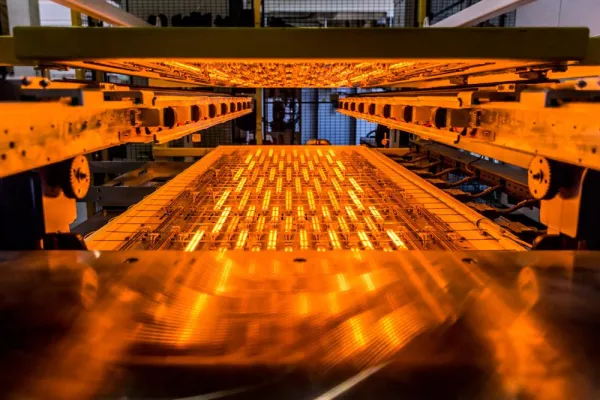
The real dream is having a single dashboard where the lamps “speak” to you. You can look at your screen and see exactly which zone in the oven is dragging. If zone three is running hot but zone four is lagging, you just tweak the power digitally. No more walking around with a handheld pyrometer, checking every single part, and hoping for the best. It just makes the whole process feel… lighter. Less stressful.